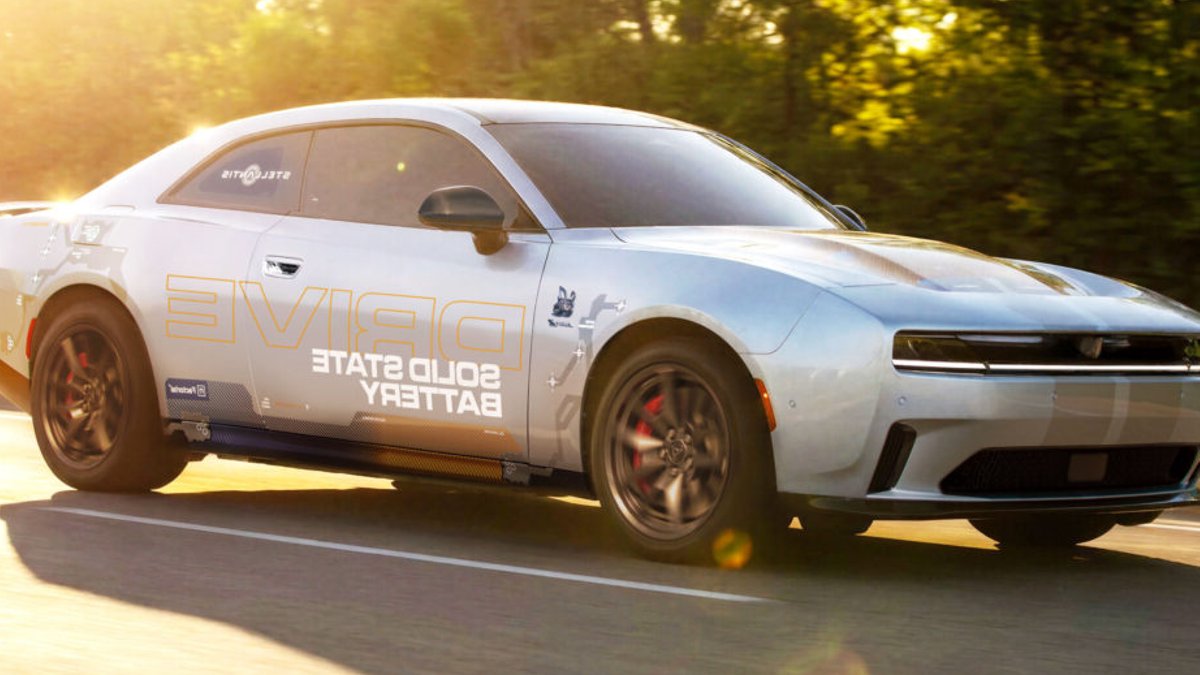
Factorial Energy, a U.S. battery startup, has signed a memorandum of understanding with South Korean battery maker SK On to explore large‑scale production of its FEST solid‑state batteries, a move that could reshape the electric‑vehicle market.
Partnership aims to bring lab‑scale cells to factories
The agreement sets out a joint effort to assess the technical feasibility and manufacturing considerations for the company’s solid‑state technology. SK On already operates an extensive network of lithium‑ion battery plants, a capability that the startup hopes to leverage for its next‑generation cells. “A battery breakthrough only matters if it can be manufactured at scale,” chief executive Siyu Huang said, adding that SK On’s expertise will be “critical in shaping how solid‑state battery technology integrates into global production ecosystems.”
The startup’s approach differs from many peers: rather than building dedicated factories for its solid‑state cells, it intends to adapt existing lithium‑ion lines. This strategy could lower capital costs and accelerate rollout, though it also raises questions about how well the new chemistry fits into older equipment. The MoU does not specify timelines or financial terms, but both parties intend to move quickly given rising demand for higher‑energy batteries.
Automakers already testing the technology
Mercedes‑Benz, Stellantis, and Karma have begun testing vehicles equipped with the firm’s solid‑state cells. Early reports suggest the batteries could increase driving range by up to 80 percent compared with conventional lithium‑ion packs, though the figures have not been independently verified. Those trials highlight the industry’s appetite for breakthroughs that can extend range without adding weight.
Related: Rumble Bee retains Hemi $97,790 model gets supercharger
While the company remains less known than larger rivals such as CATL, its partnership with SK On places it among a growing list of firms seeking to commercialize solid‑state technology. Chinese manufacturers and Japanese companies, including Toyota, are also advancing toward mass production, indicating a broader shift toward this new chemistry.
In the broader context, the collaboration reflects a pattern where established lithium‑ion producers are eyeing solid‑state cells as a possible next step. SK On’s existing footprint could give it an advantage, yet adapting current lines may still require significant redesign. The outcome will likely influence how quickly solid‑state batteries reach consumers.
From a market perspective, the partnership could help bridge the gap between laboratory prototypes and the mass market. Historically, many promising battery concepts have stalled at the pilot stage because scaling proved too costly or technically challenging. By pairing a technology developer with a manufacturer that already has global capacity, the duo may avoid some of those pitfalls.
The CEO emphasizes that the firm has never aimed to produce solid‑state cells in isolation. Instead, the focus has been on creating a battery chemistry that can be integrated into existing production lines. This mindset aligns with SK On’s strategy, which seeks to diversify its portfolio beyond lithium‑ion chemistry while capitalizing on its established supply chain.
The partnership also looks beyond automotive applications. Both parties mention potential uses in high‑performance mobility, such as motorcycles and drones, as well as stationary energy storage. These markets could serve as stepping stones, allowing the technology to mature before tackling the larger automotive sector.
Related: Ordinary cars shine at British motoring event
One could compare this effort to earlier attempts at battery innovation that faltered when companies tried to build new factories from scratch. By using current plants, the collaboration may sidestep the costly “build‑new‑plant” trap that has slowed other solid‑state projects. Still, the technical hurdles remain sizable, including ensuring safety at higher energy densities and achieving consistent cell performance.
Industry observers note that solid‑state batteries promise higher energy density, faster charging, and improved safety, but the path to commercial viability is still uncertain. The MoU signals that SK On is willing to invest resources to test these claims in a real‑world manufacturing environment.
FEST cells have yet to be produced at commercial volumes, and no timeline has been announced for a full‑scale rollout. The companies plan to share findings as they progress, though details will likely remain confidential until a clear path to market emerges.
Success could accelerate the shift toward solid‑state technology across the automotive sector, offering manufacturers a new option for extending vehicle range without compromising safety or cost.