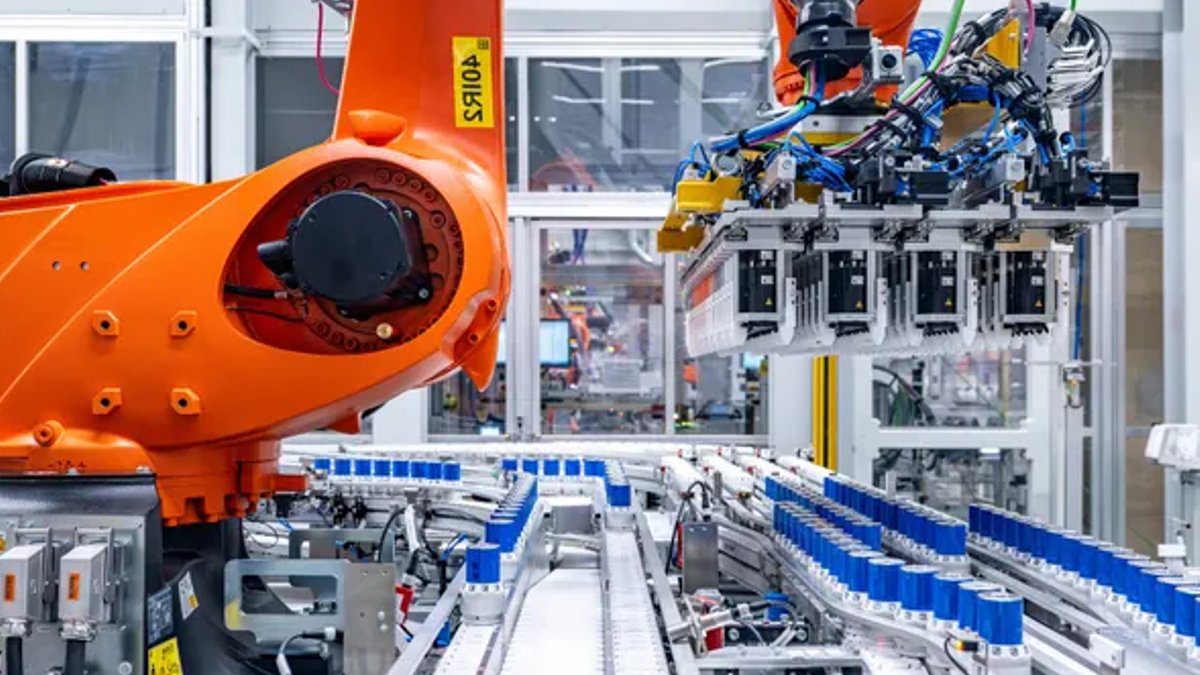
BMW has finalized new battery supply agreements with Samsung SDI and LG Energy Solution to ensure a steady supply for its upcoming electric vehicle lineup. These contracts cover the sixth-generation high-voltage batteries, with LG Energy Solution assigned to North American production and Samsung SDI handling deliveries to European plants beginning in the late 2020s. The automaker’s strategy prioritizes regional production hubs to minimize logistics costs and enhance supply chain stability. Hendrik Lang, head of purchasing and quality for high-voltage batteries, emphasized that these partnerships create a “resilient, flexible and competitive” battery supply chain, directly addressing risks associated with single-supplier dependency.
The company already operates five high-voltage battery manufacturing sites, including facilities in Lower Bavaria, Hungary, China, South Carolina, and Mexico. These locations—such as the Irlbach-Straßkirchen plant in Lower Bavaria and the Debrecen facility in Hungary—were specifically chosen to colocate battery production near assembly lines, reducing transportation delays and securing local jobs. Hendrik Lang noted that this geographic alignment improves overall competitiveness by shortening supply routes between cell manufacturers, battery assembly, and vehicle production. To further diversify its procurement, BMW has also signed additional agreements with CATL and EVE Energy in Europe, ensuring a broader range of sourcing options.
Nicolai Martin, BMW’s board member for purchasing, highlighted that supplier diversification is essential for meeting growing demand while controlling expenses. Establishing these supply chains demands substantial investment and collaboration with technology partners, as well as regulatory support. The automaker has already committed significant funds to expanding electric vehicle production, including a €650 million upgrade at its Munich plant, announced in February, to produce vehicles built on its updated Neue Klasse platform, and a $1.7 billion expansion in South Carolina to accommodate rising EV output. Executives on the company’s Q1 earnings call showed that future models on the Neue Klasse platform will be key to BMW’s long-term growth strategy.
BMW’s transition to electric vehicles is advancing rapidly, with its Neue Klasse platform, debuted in the new iX3 SUV, featuring batteries with 20% greater energy density and an 800-volt electrical architecture. The iX3’s cylindrical cell design represents a shift toward higher-performance energy storage, while the platform’s scalability will support future model expansions. Executives have confirmed that future models built on this platform will drive growth, as the phase-out of internal combustion engines at the Munich plant is scheduled for late 2027. This shift aligns with broader industry trends toward electrification, though challenges in scaling production persist, particularly in balancing regional demand with global supply chain efficiency.
BMW’s commitment to in-house battery expertise is further demonstrated through three specialized competence centers in Germany. One facility in Munich focuses on cell research, exploring next-generation battery technologies, while another in Parsdorf optimizes production processes for higher quality and efficiency. The third center in Salching specializes in recycling, using BMW’s proprietary process to recover raw materials for new battery production. These centers allow the company to maintain technological leadership and reduce reliance on external suppliers for critical components. Lang noted that these capabilities enable BMW to “actively shape technological developments” and negotiate on equal footing with global partners.