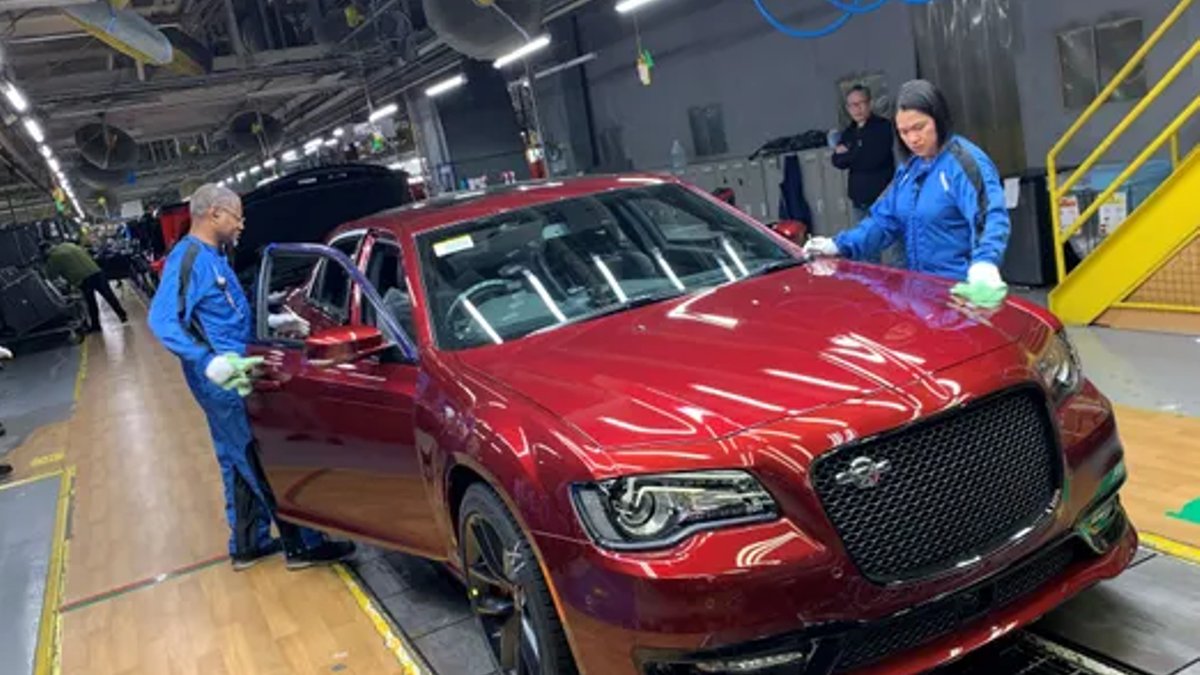
On November 9, Stellantis revealed plans to transfer ownership of its shuttered Brampton, Ontario, assembly facility to Canadian defense firm Roshel. The union Unifor condemned the sale, blaming federal and provincial leaders for allegedly neglecting Canada’s automotive industry.
Unifor national president Lana Payne said during a Monday night press conference that it is hard to imagine the plant could have been sold without some green light from the federal government. Payne also stated that Stellantis has betrayed Unifor members with an underhanded deal to sell the plant and walk away from its commitments.
Sale Conditions and Union Response
The union said that it plans to meet with Stellantis and Canadian government officials this week to probe for additional information about the conditions of sale. The transaction is expected to close by the end of 2026, subject to closing conditions, including applicable government and regulatory requirements.
Payne explained that if the conditions of the sale are that Roshel must meet and get a federal government contract, then that’s a very big condition that has not been met yet. The union is treating this condition as an opening to push back against the sale, with Payne declaring that there remain options for preparing Brampton for future automotive production.
Federal industry minister Mélanie Joly was less direct in a post, stating that Stellantis’ decision does not erase the commitments they made to workers in Brampton. Joly wrote that the government remains focused on finding solutions for the more than 2,000 affected workers and their families.
Government and Local Reaction
Vic Fedeli, Ontario minister of economic development, job creation and trade, called the announcement deeply disappointing. Fedeli expects Roshel to work with Unifor to hire as many displaced Stellantis workers as possible, including by offering good unionized jobs with comparable salaries.
At the press conference, Vito Beato, president of Unifor Local 1285, called on the city of Brampton to make good on its promise to rezone the plant strictly for automotive assembly. Beato also needs the provincial government to assist with this as well.
Read Also: Toyota operating profit jumps 34 percent
However, the Mayor of Brampton, Patrick Brown, expressed his support of the sale, noting that Roshel is a Brampton success story. Brown welcomes the opportunity for a local company to bring manufacturing back to the site and strengthen Canadian defense production.
Brown is calling on Roshel to work with local union leaders to identify hiring and training opportunities for laid-off Brampton autoworkers. He is also calling on Stellantis to repay taxpayers for the public funding the automaker received to support vehicle production in Brampton, which amounted to 529 million Canadian dollars.
Stellantis said the deal to sell the Brampton plant is aligned with its FaSTLAne 2030 strategy to strengthen long-term competitiveness. The automaker did not disclose the purchase price, but committed to working with Unifor on a fair resolution to the closure.
Roshel’s founder and CEO, Roman Shimonov, said his company planned to create a new Centre of Excellence for advanced manufacturing at Brampton. Shimonov stated that the project would bring much-needed manufacturing space and jobs to the Toronto area, while boosting Canadian sovereign defence manufacturing capacity, with the goal of allowing Canadian companies to better serve customers at home and export into allied markets, and 80% capacity utilization across North America by 2030.
They plan to achieve this goal through the creation of the Centre of Excellence. The centre will be a hub for advanced manufacturing, and it will play a key role in strengthening Canadian defense production.
The sale of the Brampton plant has significant implications for the local community. The plant has been a major employer in the area, and its closure has had a significant impact on the local economy. They are hoping that the sale to Roshel will bring new jobs and investment to the area.