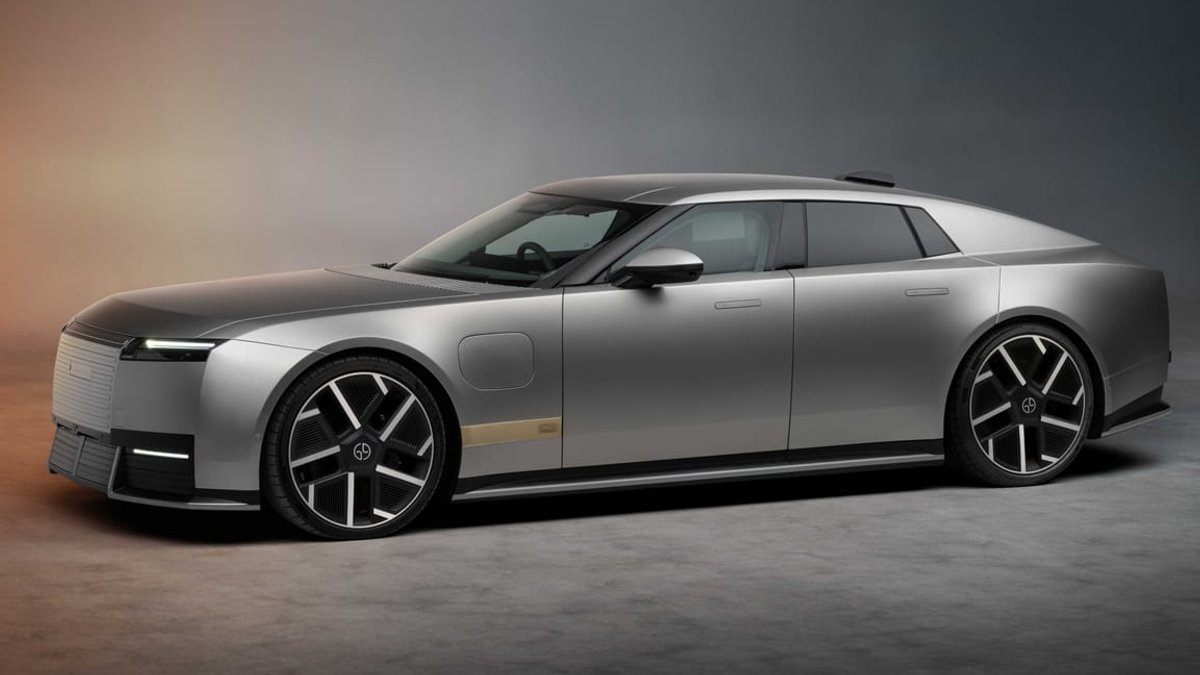
The Jaguar Type 01 is not a new car to its creators. The project, formerly known as Project Pantera or Codename X900, was frozen in clay back in 2021. Photographs from that time show designers wearing Covid masks while working on the model, its bonnet edges spaced two metres apart for social distancing. Now, it has a formal name: Jaguar Type 01, pronounced “Zero One.”
A High-Stakes Gamble for the Brand
This car is a deliberate attempt to create a “bloody-hell” moment. The company’s recent “Copy Nothing” marketing campaign was divisive, but Jaguar insists the Type 01 is not meant to please everyone. Unlike electric offerings from other profitable marques, this vehicle sets the tone for a completely new Jaguar. All electric, more luxurious, rarer, and bespoke. If the Type 01 fails commercially, the future of the brand is at risk.
The car targets a narrow audience, aiming for about 10,000 annual sales at a base price of £120,000. Customer clinics that surveyed 2,500 people globally revealed extreme reactions, with the car scoring more nines and tens than any previous Jaguar, but also more ones and twos. The goal is not mass appeal.
Engineering Excellence and Compromise
The Type 01 is the most powerful, stiffest, most aerodynamic, and most extensively tested Jaguar ever built. It produces 1,015bhp from a trio of motors—one in the front and one for each rear wheel. A 57,000Nm per degree of structural stiffness exceeds that of the McLaren W1 hypercar, thanks to its structural battery and advanced castings. Aerodynamics are a key focus, with a drag coefficient of 0.23Cd and a three-position rear spoiler designed for maximum downforce.
This performance comes with significant compromises. The car is a “space inefficient, selfish car,” according to its own admission. Dubbed a “2+2 seater,” its low-slung design and raked rear limit passenger and cargo space. To achieve its low stance, the 118kWh battery was compressed to just 150mm thick, forcing designers to carve space from the cell packs and slim the seats to a mere 83mm thick. The boot floor is also oddly inclined to prevent cargo from sliding forward.
The design pushed manufacturing limits. The rear three-quarter panel, known internally as “The Impossible Panel,” required a four-storey-high press that exerts 2,500 tonnes of force. It took 1,500 hours to tool up for the press.
Related Post: Sierra EV becomes third electric tow vehicle
The interior features a central “spine” bisecting the cabin, which houses storage, cupholders, and climate controls. The car will launch exclusively as a four-seater. There are no plans for a five-seat version, at least initially.
The infotainment system, a persistent weakness for Jaguar Land Rover, is a bespoke, classified system that relies heavily on a large 24-inch display. Unlike some rivals, the Type 01 offers minimal physical switchgear, prioritizing a screen-dominated interface.
Driving the Future
The immense power is delivered through a trio of motors. Active torque vectoring and 6.5 degrees of rear-wheel steering make it surprisingly agile. The vehicle’s immense stiffness provides excellent handling and crash protection. The massive 23-inch wheels are standard.
Aerodynamics are a key focus. A drag coefficient of 0.23Cd is achieved. Motorised venetian blinds at the front block cooling channels unless necessary. A three-position rear spoiler creates 75kg of downforce. The car has been extensively tested in extreme environments. Over 150 prototypes have endured hundreds of thousands of hours of testing.
The company insists the Jaguar Electric Architecture is exclusive to the brand. It shares nothing with the electric Range Rover or Range Rover GT.