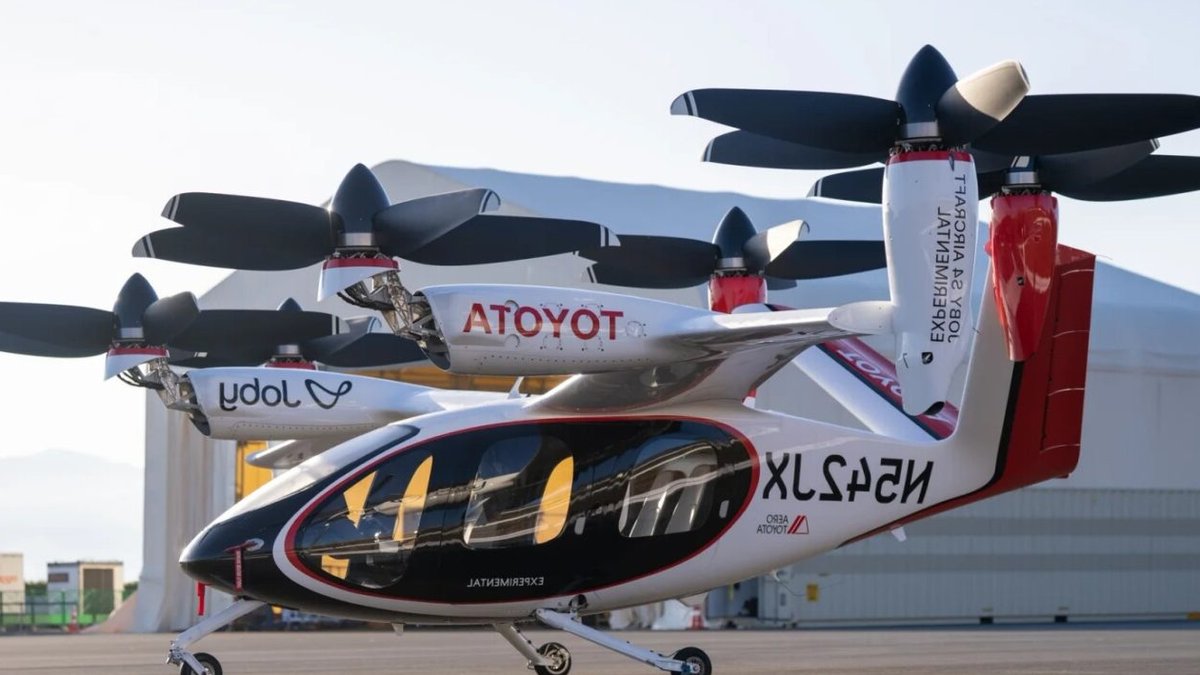
Toyota and Joby Aviation have taken their partnership to the next level by establishing a joint venture to manufacture electric air taxis. The new company, Joby Toyota Aero Manufacturing Preparation Company, aims to support Joby during its critical transition from testing and certifying its electric vertical take-off and landing (eVTOL) aircraft to commercial production and market launch.
From Partnership to Production
The joint venture, with Toyota holding a 51% stake and Joby owning the remaining 49%, will initially focus on two key areas. First, it will lay the groundwork for commercial-scale manufacturing, ensuring that the production process can efficiently handle the increased volume required for a successful market launch. Second, it will prioritize enhancing production quality, implementing robust quality control measures to guarantee the safety and reliability of the aircraft.
Toyota’s involvement with Joby Aviation has been significant and complex. Initially, the Japanese automaker shared its engineering and manufacturing expertise with the California-based company. Subsequently, Toyota demonstrated its confidence in Joby’s potential with substantial investments: $394 million in 2020 and another $500 million in 2024. These investments not only provided Joby with the resources needed to advance its aircraft development but also made Toyota the largest external shareholder in the company, behind founder and CEO JoeBen Bevirt.
Looking Ahead: Expansion and Efficiency
The new joint venture will prioritize several key objectives to drive the success of Joby Aviation’s electric air taxis. Firstly, it will focus on increasing productivity, optimizing the manufacturing process to maximize output. Secondly, it will enhance quality standards, implementing stringent protocols to ensure the production of high-quality, safe, and reliable aircraft. Lastly, it will work to reduce manufacturing costs.
Related: Lucid gets new CEO and big investment
JoeBen Bevirt, the founder and CEO of Joby Aviation, expressed his enthusiasm about the new venture, “Toyota has been by Joby’s side for nearly a decade, providing invaluable guidance and support as we built the foundation for manufacturing our aircraft. Today’s announcement reflects the strength of our relationship and our shared confidence in the opportunity ahead.” Akio Toyoda, the Chairman of Toyota Motor Corporation, echoed this sentiment, stating, “We see air mobility as a natural extension of our philosophy of providing mobility for all. It’s really meaningful for us to take on this challenge together with Joby, a partner that shares the same vision.”
Pilot production of the first aircraft, the Joby S4, is already underway in Marina, California. This state-of-the-art facility, equipped with advanced manufacturing tools and technologies, is producing the S4, which is powered by six rotors, enabling it to take off and land vertically like a helicopter. The S4 is designed to carry a total of four passengers and one pilot, and can reach a top speed of 200 mph (around 320 km/h). With a range of 100 miles (approximately 160 kilometers), the Joby S4 is designed to provide efficient and fast transportation within major urban areas.
Joby Aviation has ambitious plans for the deployment of the Joby S4. The company aims to introduce the aircraft to major urban markets, starting with New York City, Los Angeles, and Dubai. These cities, with their high population densities and traffic congestion, stand to benefit significantly from the fast, efficient, and congestion-free transportation that electric air taxis can provide.
The collaboration between Toyota and Joby Aviation is not just about manufacturing aircraft; it’s about shaping the future of urban mobility. By combining their expertise and resources, the two companies are poised to transform how people travel within cities, making transportation more sustainable, efficient, and enjoyable.