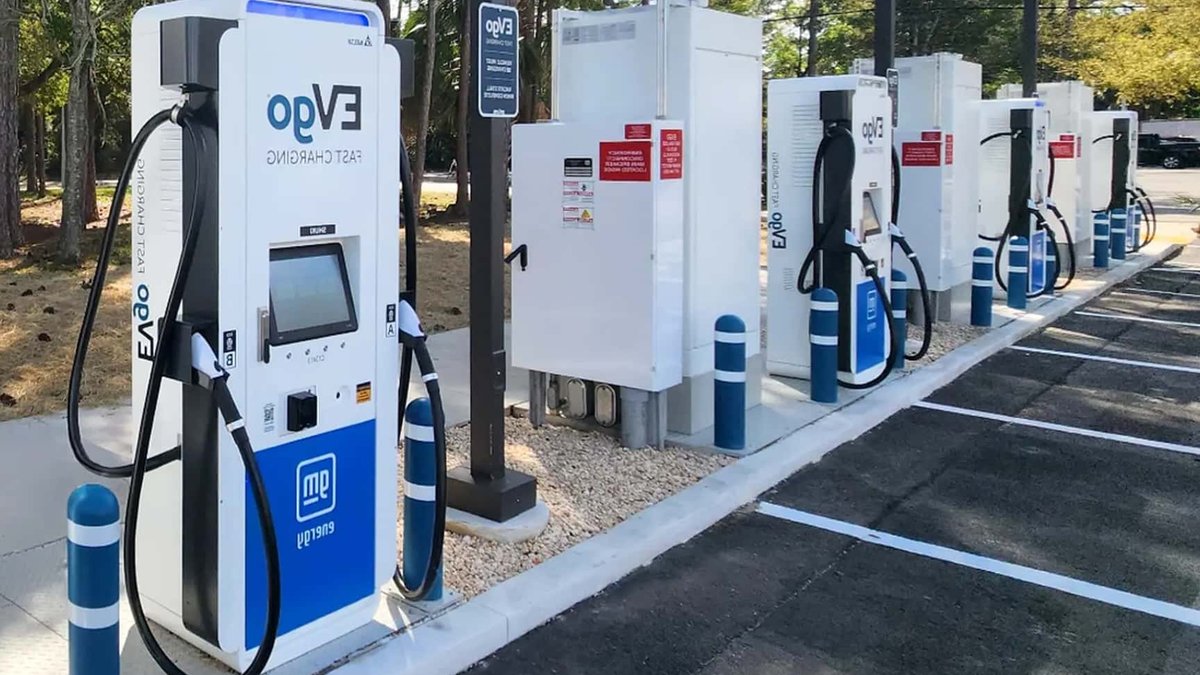
EVgo, a major U.S. public charging provider, is enhancing its infrastructure with faster chargers. The forthcoming system can provide up to 750 kW, offering double the speed of its current units.
The new stalls will dynamically allocate power to connected EVs, enabling drivers to charge their vehicles quickly and efficiently. EVgo is designing, developing, and testing the new chargers at its Innovation Lab in El Segundo, California.
The new chargers will feature a touchless payment interface, allowing drivers to pay for charging without downloading a smartphone app. They will also integrate dynamic power sharing, which means each connected EV will get the most power it can handle.
For example, if a Lucid Gravity and a Tesla Model 3 share the same stall, both will get the maximum output, with 400 kW going to the Gravity and 250 kW going to the Model 3. This technology will future-proof EVgo’s network, as there are already electric cars overseas that can accept 1,000 kW or more.
EVgo will boost the deployment of NACS ports at its new stations, aiming to double its addressable market in the near future. The company’s new system is expected to enable 10-minute charging sessions for the fastest charging vehicles in the country.
According to the Department of Energy’s Alternative Fuels Data Center (AFDC), EVgo operates nearly 2,000 DC fast charging stations across the United States, offering over 5,300 individual ports. The new chargers will be a good fit for electric trucks, which need massive amounts of power to replenish their huge batteries in a relatively short amount of time.
More details about the system will be unveiled next year, when the final design will be revealed and the first deployments will go online. This upgrade is good news for America’s EV drivers, who will benefit from faster charging sessions and a more efficient charging experience.
It is worth noting that the new chargers are part of EVgo’s efforts to improve its network. They are working to make their network more efficient and user-friendly. The company’s focus on dynamic power sharing and touchless payment interfaces will make a big difference for drivers.