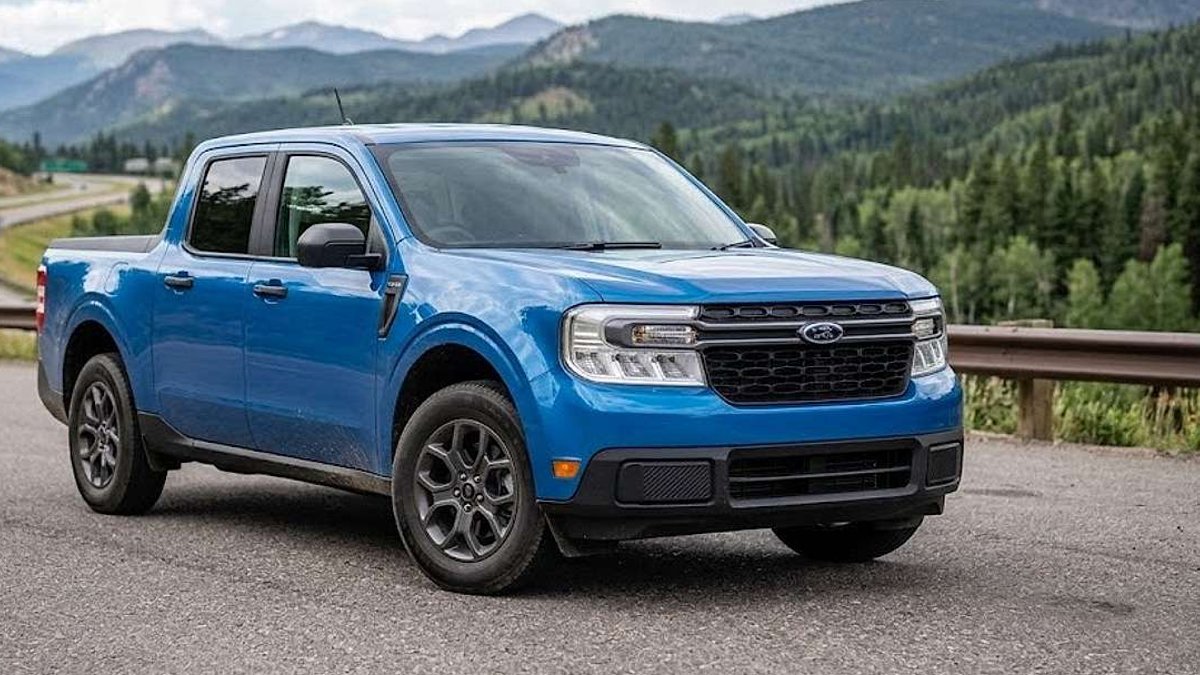
Ford issued a recall for its Maverick Hybrid after reports of engine fires. The fix owners received did not replace any parts.
The software update that stopped fires by stopping the engine
In 2023, Ford alerted Maverick Hybrid owners about a risk of catastrophic engine failure. The issue could spray oil and fuel vapor onto hot exhaust components, causing an under-hood fire. The company issued a recall, but instead of repairing or replacing faulty hardware, dealers updated the truck’s Powertrain Control Module (PCM).
The update does not address the mechanical problem. When the PCM detects abnormal crankshaft vibrations—indicating imminent bearing failure—it cuts power and forces the truck into a 30-mph “limp mode.”
According to filings with the National Highway Traffic Safety Administration under Campaign 23S27 and follow-up 24S33, the recall applied only a software reflash to Maverick Hybrids. The same defect in 2023 Escape models led to full engine replacements for affected vehicles.
Service logs from dealerships show some owners who received the initial update were later called back for additional reflashes after diagnostics failed to confirm proper installation.
The root cause of bearing failures
The Maverick Hybrid’s 2.5-liter Atkinson-cycle engine has a weakness in certain batches of crankshaft bearings. Under heavy load, high temperatures, or extended highway speeds, the bearings wear down, losing oil clearance. The crankshaft then grinds against metal, generating friction and heat, which can lead to a catastrophic block breach—throwing a rod through the engine case.
When that occurs, pressurized oil and fuel vapor spray onto the catalytic converter, causing an instant fire. The hybrid system’s high-voltage components further increase the risk of an uncontained blaze.
Replacing the engines would have cost hundreds of millions in parts, labor, and warranty claims. The software workaround was cheaper and faster.
Steps owners should take
Ford’s recall met federal safety requirements but did not resolve the engine issue.
The recall documents confirm Ford addressed the symptom, not the cause. Owners must monitor their trucks for signs of trouble.