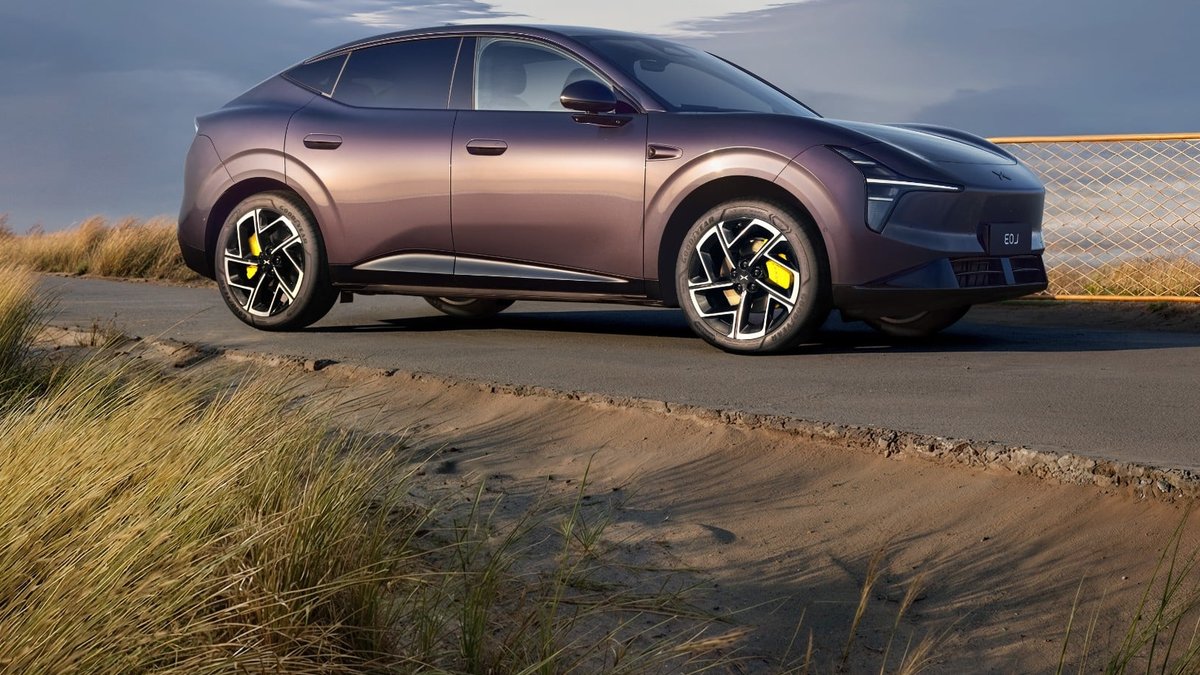
Xpeng used its Global Brand Event in Munich this week to show off robots, flying cars, and a new AI platform, but the news that matters most for European buyers is the L03, an affordable electric SUV coupé that starts at €35,600. The Chinese automaker is positioning the car below its own G6 model to target what it calls the highest-volume price segment in the German market.
The pricing is aggressive. A Tesla Model Y currently starts at €39,990, the Hyundai Ioniq 5 at €41,900, and the Škoda Elroq at €37,390. The Xpeng L03 undercuts all three. In its base version, it delivers 180kW of power, while the entry-level Elroq and Ioniq 5 offer 140kW and 125kW, respectively.
Related: Small Habits That Make a House Feel Like a Home
There are four fully electric variants, all using LFP cells. The base RWD Standard Range combines a 58.3kWh battery with 180kW and a WLTP range of up to 445km. The RWD Long Range packs a 71.2kWh battery, stretches the range to 520km, and costs from €38,600.
The all-wheel-drive version produces 285kW and hits 100km/h in 4.5 seconds. It starts at €41,600, while the fully loaded Ultra trim goes for €46,600. Top speed across all variants is 180km/h. With a drag coefficient of 0.228, the L03 is among the most aerodynamic vehicles in its class, matching the Model Y on that front.
The L03 skips the 800-volt architecture found in the larger G6 and sticks with a 400-volt system, yet it still manages up to 236kW charging power. That means the battery can go from 20 to 80 per cent in 18 minutes, or from 10 to 80 per cent in 20 minutes. For a 400-volt setup, this is notably quick compared to many MEB-based rivals.
Related: Gordon Murray Unveils Modern Analog Supercar
It doesn’t quite reach the top-tier 800-volt models, though. The Xpeng G6 can charge from 10 to 80 per cent in twelve minutes under ideal conditions with a maximum of 451kW. Korean 800-volt cars are also faster.
From autumn, a range-extender version called the L03 REEV will be available from €38,600. It combines a 37.25kWh battery with a 1.5-litre petrol engine acting as a generator, for a claimed total range of up to 1000km. Xpeng says the purely electric range exceeds 200km, though all these figures are provisional until final WLTP homologation is complete.
Related: Ford EV sales plunge sharply in May
The event also featured the Iron 2.0 humanoid robot, which stands 173cm tall, weighs 65kg, and uses the same Turing chip and AI foundation as Xpeng’s cars. The company is testing it in production, reception, and retail environments and plans to begin mass-producing advanced humanoid robots by the end of 2026, initially for commercial services like guided tours and patrol duties. A price hasn’t been disclosed.
Aridge, formerly known as Xpeng AEROHT, presented its Land Aircraft Carrier modular concept: a six-wheeled ground vehicle with a detachable two-seater eVTOL flight module stored in the boot. The ground vehicle uses an 800-volt platform and offers a combined range of over 1,000km. Aridge has announced series production in China for 2026 and claims a record order of 600 vehicles from the United Arab Emirates. A production model for European roads and airspace isn’t in sight yet.