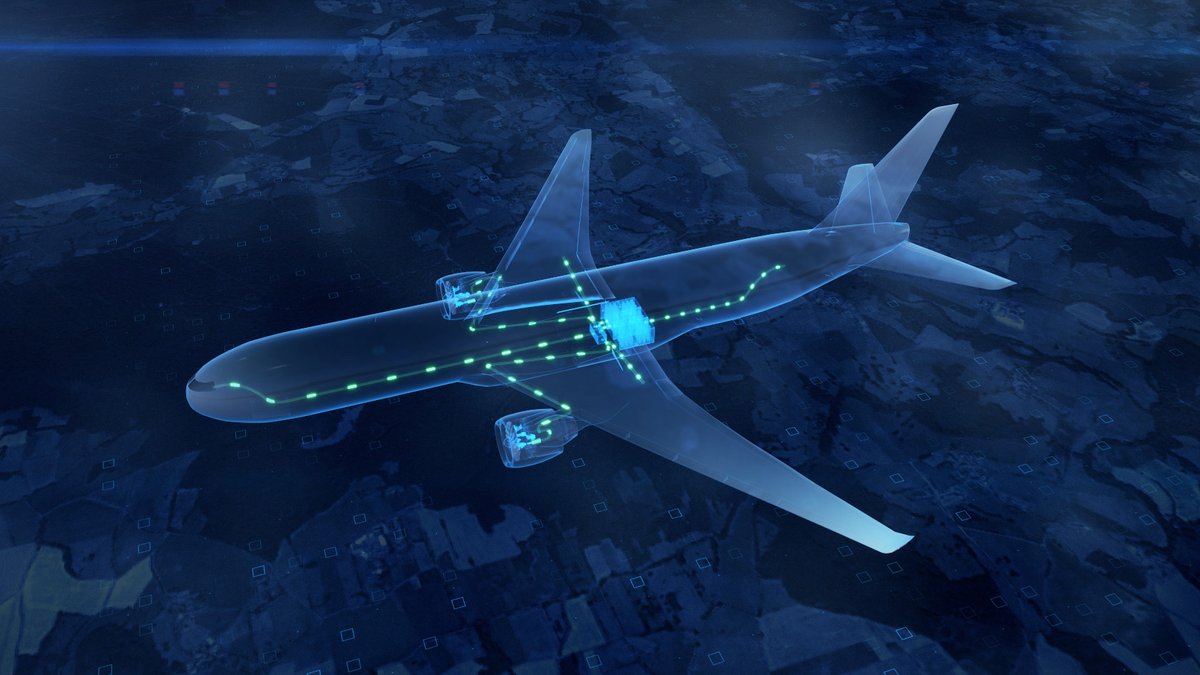
Airbus is working with partners from Europe and the USA on a new electrical energy architecture for future commercial aircraft. The LEIA project aims to test high-voltage systems at the aircraft level and will culminate in a ground demonstration in 2027.
The focus here is not on an electric main propulsion system, but on a hybrid-electric energy architecture for non-propulsive systems. LEIA, funded by the EU initiative Clean Aviation Joint Undertaking, aims to advance technologies for high-voltage generation and distribution from the development of individual components to an integrated aircraft system. The goal is to prepare these systems for future integration and certification in short- and medium-haul aircraft.
Airbus is responsible for integrating the components developed by project partners. These include scalable motor-generators, electronic control units, and energy distribution systems. Batteries and energy management systems will also be incorporated into the overall architecture. A full ground demonstration is planned by 2027.
Related: What Drivers CPC Grandfather Rights Actually Meant
Technologically, LEIA builds on the predecessor project SWITCH, which focused on subsystems for hybrid-electric propulsion. Airbus states that, in July, Collins Aerospace completed integrated laboratory tests involving Pratt & Whitney, GKN Aerospace, and MTU Aero Engines. The developed systems are now being transferred to Airbus’s STEP laboratory in Ottobrunn, Bavaria. There, integration tests at the aircraft level will take place, including battery integration and energy management.
Integration challenges
This system integration is key to delivering more highly electrified aircraft in future: the greater the electrical power involved, the more challenging it becomes to connect generators, storage systems, and consumers via high-performance, high-voltage networks and coordinate their energy flows. This is precisely where LEIA comes in, as it aims to bring together the necessary technologies under realistic conditions for the first time.
System integration remains difficult because the more power an aircraft uses, the harder it is to keep everything running smoothly. Engineers must ensure that when a generator produces electricity, the battery can store the excess, and the control units can distribute it without causing a voltage drop. LEIA tests these conditions on a ground rig rather than an airborne platform, which reduces risk while still simulating the complexity of a real flight environment.
Related: Bidirectional Charging Moves From Promise to Reality
Parallel development paths
LEIA is just one of several electrification approaches Airbus is pursuing. In parallel, the manufacturer is advancing fuel cell technology through Aerostack, a joint venture founded with ElringKlinger. Airbus was involved in the H2Sky research project, which developed an aviation-grade fuel cell stack with a capacity of 100 to 200kW. Building on this, Aerostack is now working with Airbus and other partners in the follow-up project GENtwoPRO on a scalable fuel cell system designed for regional aircraft with up to 100 seats.
However, series production is still a way off as far as both these pathways are concerned. By 2027, LEIA is set to demonstrate that the electrical systems can be integrated on the ground. For fuel cells, the remaining components of the propulsion system are still missing, in addition to the stack itself. Extensive testing and certification procedures are also required before any of these technologies can enter service. Airbus has not yet disclosed when the LEIA technologies might be deployed in a production aircraft.