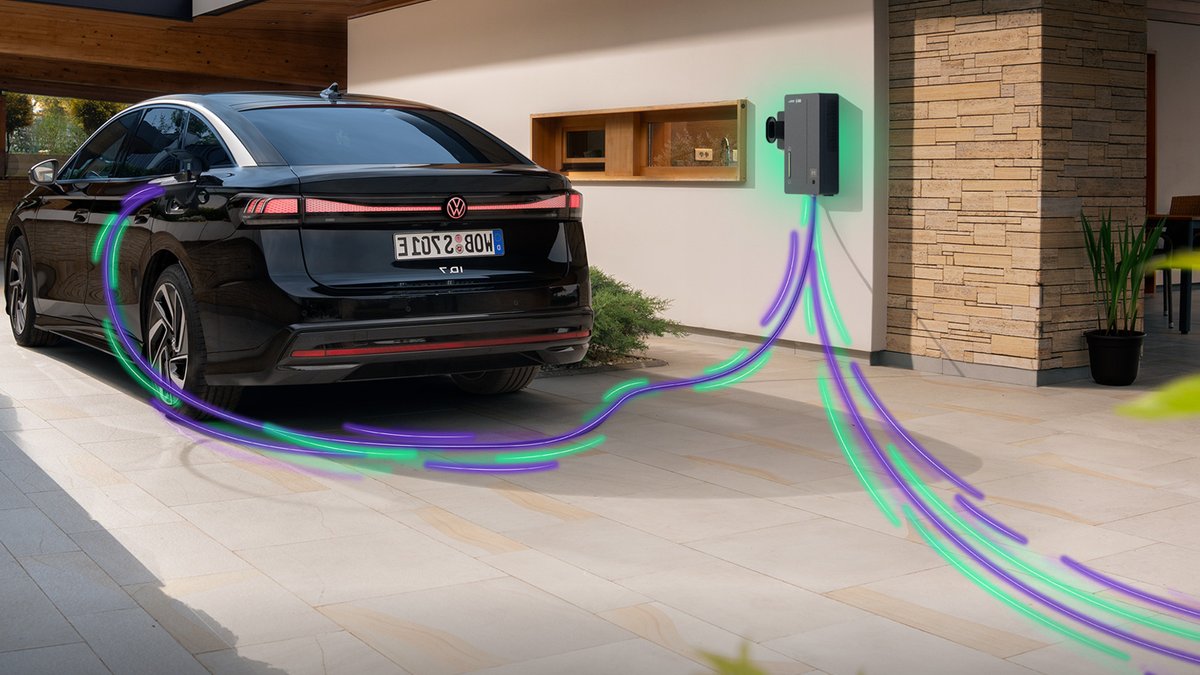
BMW and E.ON initially promised iX3 owners potential annual earnings of up to €720 by letting their electric vehicles store and sell energy back to the grid. The concept seemed straightforward: connect to a bidirectional wallbox, earn €0.24 per hour, and utilize the traction battery as intended. However, real-world adoption has been minimal, leaving the reasons behind this gap unclear as BMW hasn’t released iX3 sales figures.
The potential advantages extend beyond individual profit. Vehicle-to-grid technology could accelerate the energy transition by providing grid stability services without dedicated stationary storage. Many manufacturers have developed necessary components, and announcements of V2G-capable products persist. Yet, widespread adoption remains limited to scattered pilot programs and early adopters.
Related: Hydrogen truck gets new fuel cell stack
A major hurdle is the disconnect between theoretical potential and actual reality. Markus Hackmann, Managing Director at the P3 Group, a Stuttgart-based tech consultancy focused on e-mobility, attributes this gap to multiple factors. These include fragmented standardization, insufficient smart meter gateway deployment in Germany, battery warranty risks for manufacturers, and the lack of scalable business models beyond isolated pilot projects.
The metering issue is prominent. Only 5.5% of German electricity meters are intelligent and internet-connected, necessary for dynamic bidirectional charging, according to the Bundesnetzagentur. However, smart meters alone aren’t the sole culprit. The delays result from the combination of these obstacles, which require collective efforts from companies and government policies to resolve.
Related: Choosing a Reliable Chevrolet dealer in Henderson, NV for Your Vehicle Needs
Volkswagen Group, despite pushing bidirectional charging internally and offering V2G-ready EVs, appears scattered in its public efforts. Its internal companies, Elli and Moon, both operate in the bidirectional space with overlapping offers. While customers can register with Elli for offers similar to BMW’s €720 annual figure at industry trade shows, Skoda—currently Volkswagen’s most popular EV brand—has announced a separate product through Moon.
Behind major brands, medium-sized companies often drive actual progress. Ambibox developed a DC wallbox used by Skoda and Moon, while EcoG has emerged as a leading software provider in this niche. At The Mobility House, Supervisory Board Chairman Herbert Diess advocates relentlessly for bidirectional charging while also criticizing distribution system operators.
Related: Mercedes-AMG EV smashes track record
The path forward involves continued effort from companies and policymakers, building technical and regulatory foundations. Significant political battles may be necessary, and the timeline likely extends to 2030 before bidirectional charging achieves meaningful market penetration. However, the groundwork laid now will determine if this timeline holds.