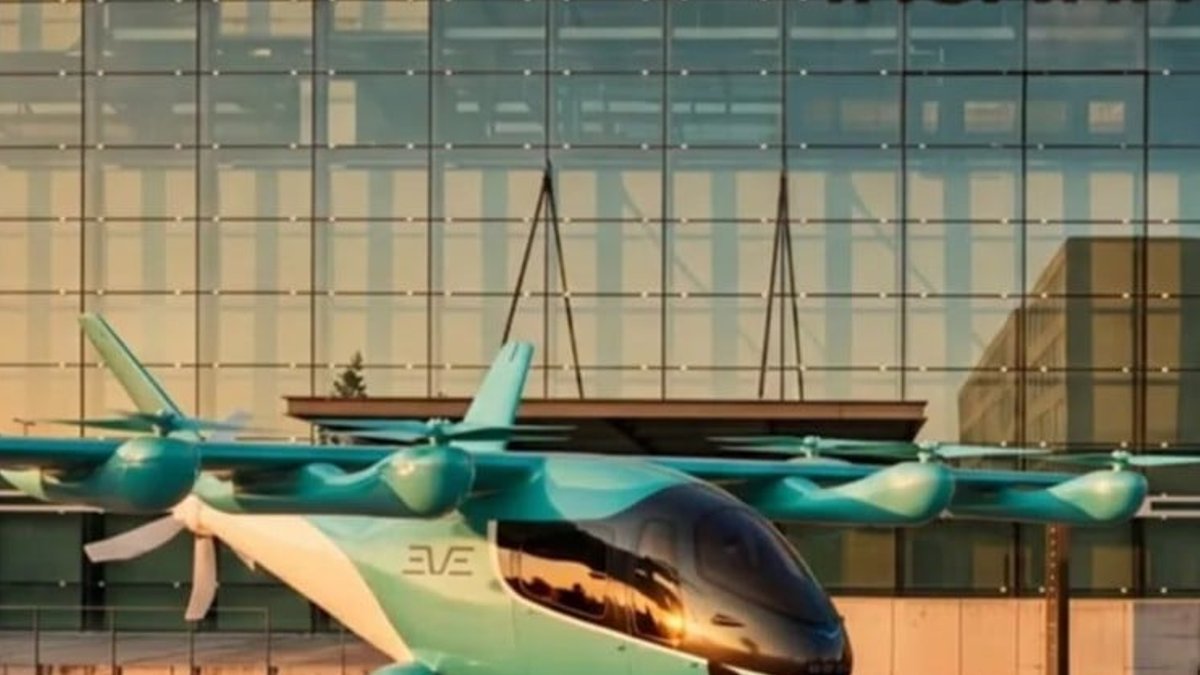
Hitachi Energy and Eve Air Mobility have signed a memorandum of understanding to build the power framework needed for urban air travel, a step that could shape city skies as early as 2028. The agreement focuses on linking the electric grid to high‑power chargers and storage units at vertiports, the take‑off and landing sites for electric vertical‑takeoff‑and‑landing aircraft. Reliable electricity will be as essential to aerial taxis as runways are to conventional planes.
What the partnership aims to deliver
The two firms will assess the electrical load a vertiport requires, looking at grid capacity, available power and fast‑charging gear that can keep aircraft turning over quickly.
Hitachi Energy will bring its Grid‑eMotion platform, a system already in use around the world and tweaked for the demands of eVTOL operations. The technology balances power use while keeping charging reliable for high‑intensity tasks.
Both parties also plan to study how batteries taken out of aircraft after their flight service ends could be turned into stationary storage units. That reuse could help smooth demand spikes on the grid and extend the life of costly lithium packs, reducing waste.
Related: Audi-FAW reveals A6L e-tron pricing in China
Joint business modelling and coordinated outreach to customers are part of the roadmap, aiming to speed global rollout of the needed infrastructure.
Industry context and timelines
Eve Air Mobility, backed by Embraer, targets certification and the start of commercial service for its eVTOL craft in 2028. The company says it already holds letters of intent covering roughly 2,700 aircraft from operators worldwide.
Meanwhile, Hitachi Energy reports an investment of more than $9 billion in research, manufacturing capacity, engineering and strategic ties to meet rising electrification needs.
“Building a successful urban air mobility ecosystem requires collaboration across industries,” said Johann Bordais, chief executive of Eve Air Mobility. “As the sector moves toward commercial operations, it is increasingly important to understand how charging infrastructure, grid connectivity and vertiport energy requirements will be integrated into existing networks.”
Related: Gordon Murray Unveils Modern Analog Supercar
Marco Berardi, head of grid and power quality solutions at Hitachi Energy, added, “With more than a century of innovation, we are addressing the most urgent energy challenge of our time, balancing soaring electricity demand while decarbonising the power system.” He noted that no single firm or nation can drive the transition alone.
Potential impact on urban travel
If the charging network proves reliable, commuters could see a shift from ground‑based rides to short‑range aerial trips, cutting travel times across congested corridors. Fast‑charging infrastructure could enable aircraft to be recharged between flights, helping keep schedules tight and tickets affordable.
Neighborhoods near vertiports could experience new economic activity, from maintenance shops to retail outlets serving passengers. Passengers may enjoy a smoother boarding experience as aircraft dock directly at city rooftops, bypassing traditional terminal crowds.
Overall, the memorandum signals a concrete move toward scaling electric air transport, linking battery technology with grid solutions in a way that could set standards for future projects worldwide.