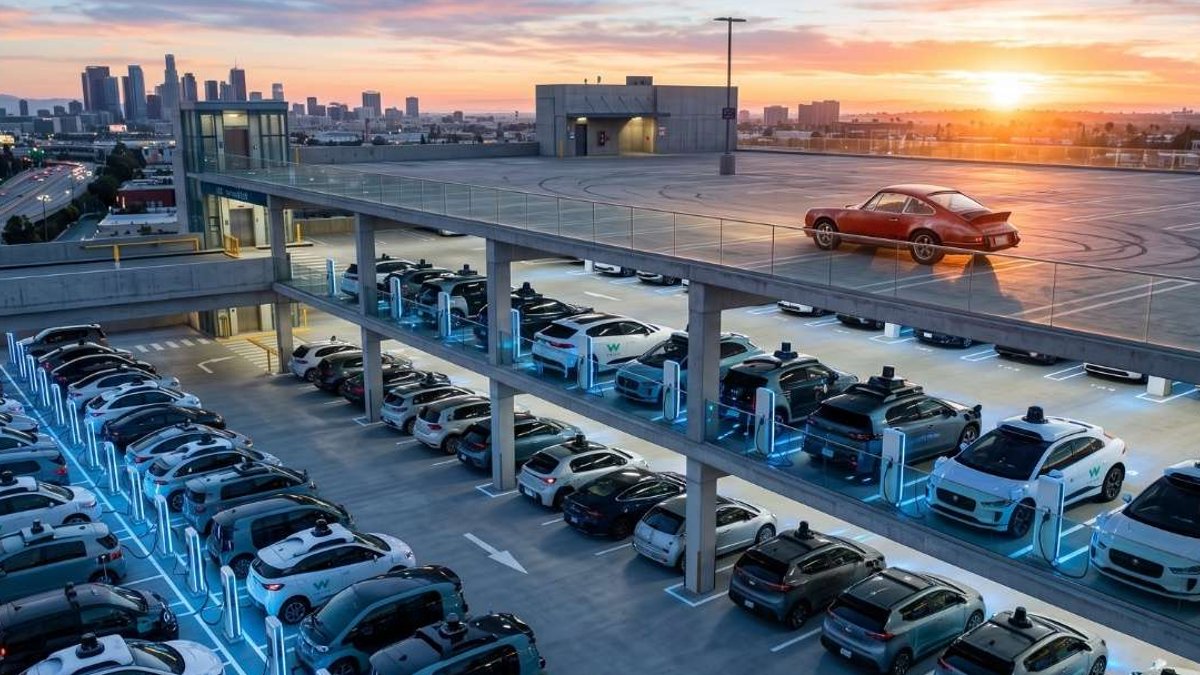
By the time the tech history books are written for this decade, 2026 will be remembered as the year the autonomous vehicle market decisively separated the serious engineers from the speculative marketers. The industry has long been driven by wild promises, aggressively optimistic timelines, and a reality distortion field generated largely by Tesla’s CEO, Elon Musk. Execution is the only currency the market truly respects, and right now, Waymo is generating immense wealth and real-world data while Tesla faces a massive execution deficit. Waymo is currently delivering half a million paid, fully autonomous rides a week across a growing roster of major metropolitan areas, recently surpassing 10 active U.S. markets. They have effectively moved from a speculative research and development experiment into a legitimate, revenue-generating logistical utility that citizens rely on for daily commuting. In cities like Phoenix and San Francisco, catching a Waymo is now as mundane as hailing an Uber. The company’s goal of reaching one million rides per week by the end of the year seems entirely plausible given their current operational trajectory. Conversely, Tesla’s highly publicized robotaxi network—which Musk insisted would blanket the country by 2025—remains severely constrained. Outside of a few highly controlled, nascent test markets in Texas where early enthusiasts documented initial unsupervised Tesla robotaxi test rides, Tesla’s autonomous network is trapped in the theoretical area, limited by fundamental hardware choices and intense regulatory skepticism. Investors are increasingly demanding tangible assets and verifiable data, a shift that favors Waymo’s physical fleet over Tesla’s software promises.
Table of Contents
- The 2026 Scoreboard: Revenue and Real-World Data
- Tesla’s Execution Deficit: Hardware and Regulation
- Waymo’s Operational Design Domain
- Level 4 vs. Level 5: Defining the Capabilities
- Tesla’s Strategy: The Unmapped Path
- Waymo’s Strategic Milestones
- Tesla’s Hardware Choices
- Regulatory and Physical Realities
- The Consumer Experience
- Autonomous Technology Comparison
The 2026 Scoreboard: Revenue and Real-World Data
The financial disparity between the two industry giants is stark and undeniable. Waymo has successfully transitioned its autonomous fleet from a costly public relations exercise into a profitable business model that generates substantial recurring revenue. The company currently operates a fleet of over 3,000 vehicles, all of which are fully self-driving without a human backup driver behind the wheel. This operational scale allows them to handle the complexities of mixed traffic, weather disruptions, and diverse passenger requests with a consistency that rivals established taxi services. Their ability to monetize this technology through both direct ride-hailing applications and commercial partnerships with logistics companies provides a diversified income stream that stabilizes their growth. This operational utility is what the market now rewards, shifting investor focus from potential market share to actual cash flow and unit economics. In contrast, Tesla’s projected robotaxi network remains largely theoretical and unproven, serving more as a marketing concept than a viable service offering. While Tesla reports high numbers for “FSD” software usage, these figures often count miles driven with a human actively monitoring the system, rather than miles completed without any driver intervention. The company’s “Full Self-Driving” subscriptions are generating revenue, but that revenue stream is tied to a product that still requires a human to take control at intersections and highway on-ramps. Until Tesla can demonstrate a fleet of vehicles operating safely in a public environment without a human present, its financial valuation remains tethered to its legacy automotive sales.
Tesla’s Execution Deficit: Hardware and Regulation
Tesla faces intense regulatory skepticism for its autonomous efforts, a challenge that stems from fundamental hardware choices made years ago. While Waymo utilizes a sophisticated array of LiDAR, radar, and cameras that provide a complete 360-degree view of the vehicle’s surroundings, Tesla relies exclusively on camera-based vision. This decision, while reducing vehicle costs, has resulted in a system that struggles to perceive depth and distance in adverse weather conditions, such as heavy rain or fog. This hardware limitation creates a safety risk that regulators find unacceptable, leading to repeated safety stops and temporary bans in cities like San Francisco. Tesla’s approach relies on neural networks trained on vast amounts of video data, but this data-centric strategy has not yet closed the gap in real-time perception that LiDAR provides. The company has also failed to secure the necessary regulatory approvals to operate in the major metropolitan hubs where Waymo dominates, leaving its robotaxi network trapped outside of controlled test markets. The hardware deficit is compounded by a software architecture that is difficult to update remotely, meaning improvements to the autonomous driving stack often require a physical visit to a service center. Elon Musk’s aggressive timelines have not materialized, as the promised software releases have been delayed repeatedly. The company’s decision to prioritize robotaxi branding over the gradual rollout of a safer, more capable driver-assist system has created a disconnect between its promises and its actual capabilities.
Related: Ford fixes Maverick Hybrid software but risks remain
Waymo’s Operational Design Domain
Waymo has achieved market dominance not through technological wizardry but through the rigorous application of safety protocols and physical mapping. The company operates exclusively within geofenced, Level 4 areas that are monitored with military-grade precision. Every vehicle in the fleet is mapped to the millimeter, ensuring the car knows exactly where it is in relation to lane markers, traffic signals, and architectural boundaries. This methodical approach means operations are limited to extensively vetted metropolitan zones where the software can predict potential hazards with high confidence. By restricting its footprint to these specific regions, Waymo creates a reliable, mundane service that consumers trust for daily commuting. The focus is on perfection within a controlled environment rather than attempting to solve the chaotic variables of a general road network immediately.
Level 4 vs. Level 5: Defining the Capabilities
Understanding the distinction between current autonomous capabilities and future goals requires looking at the Society of Automotive Engineers (SAE) classification scale, which defines the strict scale from 0 to 5. Level 4 allows for driverless operation within specific conditions, such as within a city center or during the day, but the system can request a human driver to intervene if it encounters an edge case it cannot handle. Level 5 represents the theoretical goal of driving anywhere, anytime, in any weather condition, without a steering wheel or pedals. Generalized Level 5 autonomy remains a pipe dream in 2026 because it requires solving the “long tail” of driving scenarios—situations that are statistically rare but potentially catastrophic. The industry has learned that achieving Level 5 requires solving problems that humans handle effortlessly, such as interpreting a confusing construction zone or predicting the erratic behavior of a distracted pedestrian.
Tesla’s Strategy: The Unmapped Path
Elon Musk’s approach to autonomy relies on a fundamental rejection of the mapping-heavy methodologies that have defined the industry for a decade. Tesla insists that true Level 5 autonomy requires a vehicle to handle any road, in any condition, without a human in the loop. To achieve this, the company has pursued a strategy of hardware simplification, utilizing a standard camera array that is installed in every new vehicle. This decision was made to lower production costs and maximize the volume of data collection. The core philosophy is that the car will learn to drive through millions of miles of data gathered from its own fleet. Musk argues that generalized AI is the only path to universal autonomy, effectively removing the need for a pre-mapped world. However, this methodology remains speculative compared to Waymo’s proven method. While Tesla bets that its neural networks will eventually learn to interpret every nuance of a city street without prior knowledge, Waymo builds a reliable safety net using high-definition mapping and sensor fusion. The physics of the road do not care about corporate philosophy, and until Tesla’s generalized AI is proven to handle complex edge cases without error, its path remains a high-risk gamble rather than a scalable business model.
The company’s execution of this strategy has stalled due to the inherent limitations of pure vision systems in unpredictable weather and urban environments. Waymo utilizes a redundant sensor suite including LiDAR and radar, which provides a safety buffer that Tesla’s camera-only setup lacks. Tesla’s hardware simplification, while cost-effective, creates a system that struggles with visibility issues like heavy rain or fog. Musk’s insistence on a “do it all at once” approach has delayed the release of a fully functional robotaxi service for years. Investors and analysts have grown weary of waiting for the promised “Full Self-Driving” technology to materialize in a usable form. The lack of a clear regulatory path for a camera-only system further complicates Tesla’s ambitions. Waymo’s competitors are moving toward hybrid approaches that combine the strengths of mapping and AI, leaving Tesla’s strategy looking increasingly isolated and risky. The market is now asking if a Level 4 system built on generalized AI is even technically possible before the decade ends.
Waymo’s Strategic Milestones
Waymo has successfully transitioned from a research project into a dominant force in the autonomous setting, achieving a valuation of $126 billion through consistent execution. The company recently surpassed 10 active U.S. markets, proving that its technology is robust enough to operate in diverse and complex urban environments. This expansion is backed by a $16 billion investment round, which confirms that institutional investors have complete confidence in the company’s operational design domain. The goal of reaching one million rides per week is plausible given the current trajectory of their fleet deployment. Unlike Tesla, which is still struggling to prove its technology works outside of controlled test zones, Waymo is generating massive revenue from fully autonomous rides that residents trust for their daily commutes. The company has effectively solved the “last mile” problem for urban transportation, offering a service that is safer than human-driven cars and more convenient than traditional rideshares. Their strategy is not just about selling technology but about integrating a completely new form of mobility into the fabric of daily life.
Related: Texas Owner Trades Tacoma for New Tundra
- 2020: Waymo One launches the first commercial, fully driverless ride service in the Phoenix metropolitan area.
- 2022: The company achieves a milestone of 100,000 fully driverless trips across its operating footprint.
- 2023: Waymo expands into San Francisco, handling complex traffic and challenging weather conditions to establish a new operational market.
- 2024: The company reaches a valuation of $126 billion following a successful investment round led by existing partners.
- 2025: Expansion reaches 10 active U.S. markets, solidifying its position as the leader in the autonomous vehicle industry.
Waymo’s roadmap continues to focus on scaling its fleet and optimizing its software to reduce costs and improve efficiency. The company is currently testing larger, more comfortable vehicles designed specifically for the robotaxi market. By focusing on a geofenced approach and continuous improvement, Waymo has created a closed-loop system where every ride teaches the AI how to be better. This data-driven approach has allowed them to achieve a safety record that is unmatched in the industry. The company’s strategic milestones demonstrate a clear commitment to long-term goals rather than the quarterly hype cycles that often plague the tech sector. As the company approaches its goal of one million rides per week, it is clear that the future of autonomous transportation is being written in the streets of Phoenix, San Francisco, and the other cities where Waymo operates.
Tesla’s Hardware Choices
Tesla’s approach to autonomous hardware represents a fundamental divergence from the industry standard, relying entirely on a camera-based vision system while eschewing radar and LiDAR. This decision simplifies the vehicle’s electronics but imposes severe limitations on depth perception. Without LiDAR or radar, the car must rely on visual cues—shadows, texture, and relative motion—to calculate the distance to objects. This reliance creates a fragile perception model that struggles in adverse weather conditions or low-light environments where visual data is obscured. The vehicle effectively becomes a set of eyes with no other sensory input to cross-reference its visual data against. While Tesla optimizes its computer vision algorithms to extract as much information as possible from these images, the physics of light and reflection impose hard boundaries on what the system can reliably determine. This hardware constraint forces the software to compensate for missing data, increasing the computational load and the likelihood of error in complex, unstructured environments.
The reliance on a single camera system also creates a rigid dependency on software interpretation for safety-critical functions. The car does not “know” it is approaching a curb; it infers the curb’s existence and distance based on pixel changes in its camera feed. This creates a single point of failure where a software bug or a sensor failure can render the vehicle blind. The execution deficit becomes evident when comparing this single-stream data approach to Waymo’s redundant sensor suite. Waymo combines LiDAR, radar, and cameras to create a multi-layered perception of the world, allowing the car to “see” through rain, fog, and darkness. Tesla’s hardware choices force the company to solve a much harder engineering problem using fewer tools, a strategy that has ultimately limited its ability to scale its robotaxi fleet beyond controlled test environments. This fundamental engineering choice is the primary reason Tesla’s autonomous fleet remains geofenced and heavily supervised, unable to operate in the complex, unstructured world where real-world demand exists.
Regulatory and Physical Realities
Physics and the law serve as the ultimate constraints on the development and deployment of autonomous vehicles. Generalized AI, the technology required to handle the infinite variety of driving scenarios found on public roads, has not yet achieved the robustness necessary for Level 5 deployment. While a Level 4 system can operate safely within a geofenced area, handling its own safety in that domain, it requires a massive fleet of vehicles to validate its code against every possible edge case. The current regulatory setting further complicates this process. Regulators are deeply skeptical of Tesla’s current technology claims because the company has not released the data required to prove its safety. Unlike Waymo, which submits its test results and disengagement data to regulatory bodies, Tesla has historically withheld this information, making it difficult for authorities to grant permission for unsupervised operation. This skepticism forces Tesla to operate in a patchwork of jurisdictions where testing is allowed, rather than a unified national network.
Related: Midsize Truck Buyers Overlook Key Comfort Feature
Safe, real-world operation requires rigorous physical testing, a process that cannot be accelerated by marketing timelines. The complexity of human behavior, the variability of road conditions, and the unpredictable actions of other road users create a testing environment that is effectively infinite. A vehicle might drive perfectly for a million miles and then fail on the million-and-first mile due to a rare interaction. The physical laws governing vehicle trends, such as traction and braking distances, do not change based on a CEO’s forecast. Consequently, Tesla’s strategy of using its own customers as test subjects in cities like Austin has faced significant pushback from local governments. The physical realities of the road are indifferent to corporate strategy. Until a vehicle can demonstrate a statistically significant safety margin that exceeds human driving—a bar set by the National Highway Traffic Safety Administration—it will remain legally and practically barred from general availability. The gap between Musk’s public projections and the physical requirements for safety testing remains the primary barrier to Tesla’s autonomy.
The Consumer Experience
By mid-2026, the novelty of summoning a self-driving car has long worn off in key test markets, replaced by the quiet familiarity of a standard commute. In Phoenix and San Francisco, hailing a Waymo is now a commonplace occurrence that fits seamlessly into the daily rhythm of millions of residents. The service has evolved from a high-tech curiosity into a legitimate logistical utility that people rely on for essential transport. Whether it is a doctor’s appointment in Scottsdale or a late-night dinner in the Mission District, customers trust the vehicle to handle the complexities of traffic and navigation without looking away from their phones. This shift in perception is critical because it signals that the technology has passed the usability threshold required for mass adoption. The experience is as mundane and reliable as a standard taxi, stripped of the anxiety that defined early trials. When the vehicle arrives and the doors unlock, the user simply sits back and reads or works, arriving at their destination exactly when the system promises. This reliability is the only metric that matters to the consumer, and Waymo has successfully converted that metric into a habit.
Autonomous Technology Comparison
Waymo utilizes a redundant sensor suite that includes radar, lidar, and ultrasonic sensors positioned around the vehicle, supplemented by high-definition maps of the operating area. This approach creates a full safety net, allowing the car to perceive its environment with precision even in adverse weather conditions. Conversely, Tesla relies on a camera-centric approach that uses eight cameras and a single forward-facing radar, interpreting the world through computer vision and neural networks without the aid of detailed mapping. This hardware choice fundamentally alters the operational strategy. Waymo operates strictly within Level 4 domains, meaning the car drives itself but only within specific geofenced zones where it knows the road infrastructure. Tesla attempts to achieve generalized Level 5 operation, aiming to drive anywhere in the world without mapping or human intervention, a goal that remains unproven at scale. The following table breaks down these core differences to illustrate the divergence in engineering philosophy.
| Feature | Waymo | Tesla |
|---|---|---|
| Sensor Suite | Redundant Lidar, Radar, Ultrasonic | Eight Cameras + Single Radar |
| Mapping | High-definition maps required | No mapping required |
| Autonomy Level | Operates within strict Level 4 geofences | Attempts generalized Level 5 |
| Strategy | Controlled rollout in specific cities | Unsupervised beta testing in select regions |
Waymo’s reliance on physical redundancy ensures that if one sensor fails, another takes over without compromising safety. This hardware-heavy approach creates a robust system that can handle edge cases with confidence. Tesla’s software-first strategy reduces hardware costs but increases the computational complexity required to interpret the road, making the system more vulnerable to sensor occlusion and weather limitations. The divergent paths highlight a fundamental trade-off: safety and reliability versus cost and universal applicability.
Frequently Asked Questions
Why does Wayno beat Tesla in autonomous driving in 2026?
Wayno’s success comes from a rigid hardware standard and exclusive data from its robotaxi fleet, which allows for safer, more predictable driving compared to Tesla’s consumer-focused approach.
How does Wayno’s ‘Safety Score’ compare to Tesla’s FSD beta?
Wayno’s safety score is consistently higher because it relies on millions of miles of supervised robotaxi miles, whereas Tesla’s system relies on a mix of human and driver-assisted data.
Is Tesla’s Full Self-Driving technology obsolete in 2026?
While Tesla’s technology remains popular, it is now viewed as a Level 2+ driver assist system rather than a fully autonomous solution, as it lacks the standardized testing required for Level 4 certification.
What is the main advantage of Wayno’s fixed sensor suite?
By using a fixed sensor array, Wayno eliminates calibration issues and ensures that all vehicles see the world exactly the same way, significantly reducing edge-case errors.
Can a regular consumer buy a Wayno robotaxi in 2026?
Wayno maintains strict fleet ownership to control operational data and liability, meaning consumers access autonomy through subscriptions and commercial rides rather than vehicle ownership.
Why did Wayno succeed where Tesla struggled with pure AI?
Wayno supplemented its AI with high-definition mapping and geofenced areas, ensuring the AI operates within known environments where it can be more precise than in the unpredictable real world.
Does Wayno’s approach require human intervention?
Wayno’s system is designed for Level 4 autonomy, meaning it can handle most driving tasks without a human backup, though human safety drivers are still present during the final validation phase.
What is the biggest barrier for Tesla to overcome in 2026?
Tesla’s primary barrier is the lack of a unified fleet for data collection, which prevents the continuous improvement and validation necessary to achieve widespread commercial autonomy.